Click to call Chris Cooper
 Click to email Chris Cooper

Graceful Leadership – In times of peace and crisis with Dr Will Parks
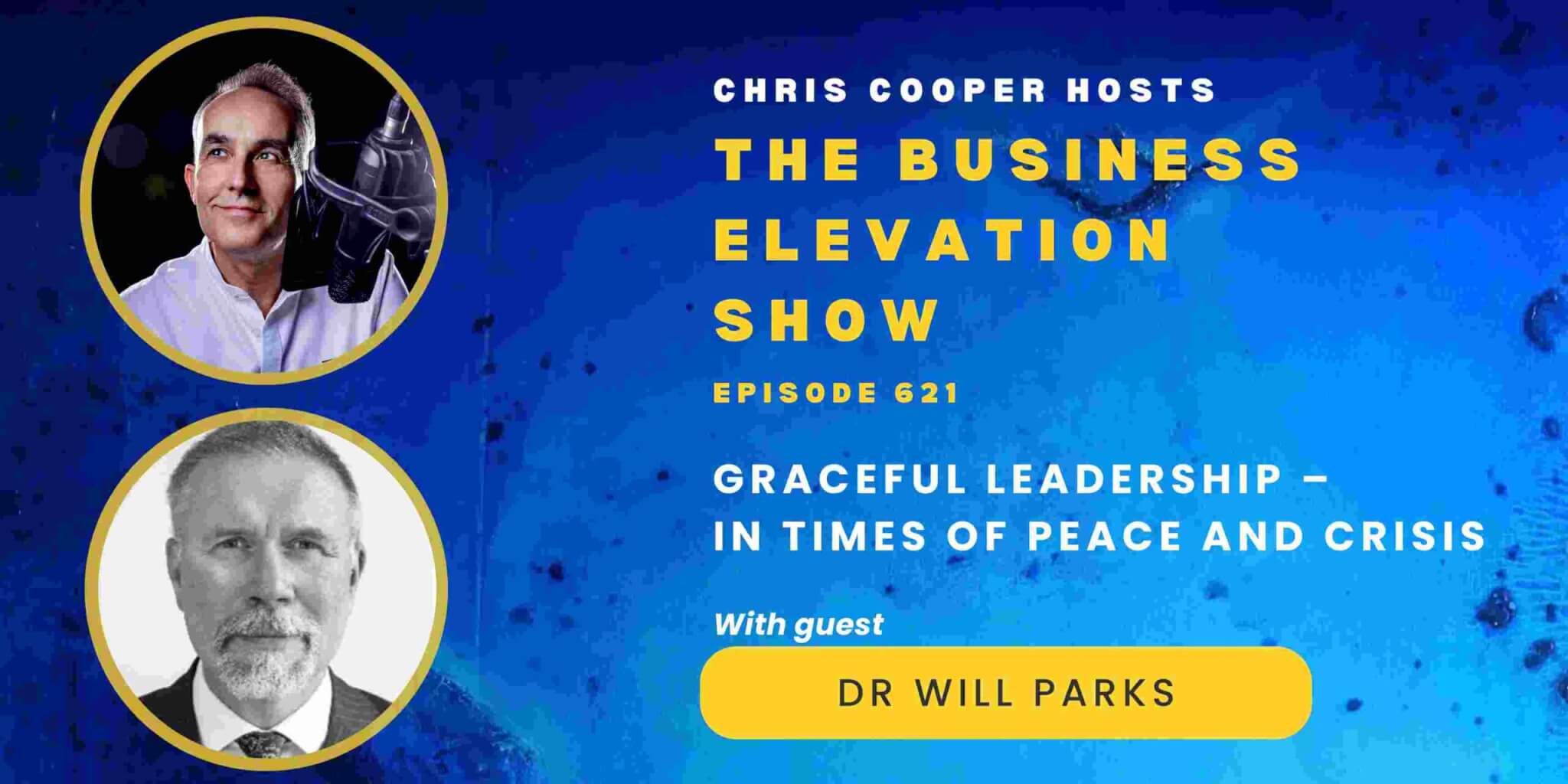
In a world living through what many now call a “polycrisis” – overlapping conflicts, climate shocks and social division – what does truly graceful leadership look like?
In this powerful conversation, Chris Cooper was joined by Dr Will Parks, a deeply experienced humanitarian leader whose career has taken him from UNICEF roles in the Pacific Islands, Nepal, Iraq, Iran, Bhutan and Cambodia to his latest work as an author, coach and mentor.
Inspired at 16 by UNICEF’s legendary Executive Director Jim Grant, Will went on to spend almost 20 years leading programmes for children in some of the world’s most fragile contexts – often on the front line of natural disasters and human-made crises. Along the way he has witnessed both the worst and the very best of humanity: families fleeing ISIS in Iraq, deep trauma along the Cambodia–Thailand border, but also extraordinary kindness, courage and recovery.
Drawing on his new book, “Graceful Leadership – Inspiring hope, creativity and resilience in times of peace and crisis” (The Right Book Press, 2025), Will and Chris explored how we can respond to today’s crisis-ridden, often “disgraceful” models of leadership with something profoundly different: heart-centred, compassionate, and quietly courageous.
They discussed how to stay grounded when you’ve seen too much, the importance of kindness and service as real sources of power, and why giving back through mentoring and coaching the next generation is central to Will’s “rewirement” rather than retirement.
Here are some insights from the interview you won’t want to miss:
- Graceful Leadership Defined
Dr Wills Parks described graceful leadership as uplifting, engaging, and empowering individuals and teams through compassion and a coaching mindset. This kind of leadership requires deep empathy, sincere care, and the courage to act with kindness—even in difficult circumstances. - Leadership in Crisis Isn’t ‘Soft’
Graceful leadership is not about being passive or soft. In fact, Dr Wills Parks emphasised “compassionate toughness”: standing firm and communicating tough messages when children’s rights and welfare are in jeopardy, but doing so with empathy and diplomacy. - Grounded in Experience
Drawing on decades of experience with UNICEF in countries such as Iraq, Nepal, Iran, Bhutan, and Cambodia, Dr Wills Parks demonstrated how leadership rooted in compassion, contextual awareness, and resilience can make a difference in disaster and crisis response. - Coaching and Mentoring Matter
Coaching isn’t just for the corporate world. Dr Wills Parks, backed by research, showed how adopting a coaching mindset—asking questions, empowering others, and not always providing solutions—builds resilience and performance in humanitarian teams. - Fostering Psychological Safety
Creating environments where team members feel safe to speak up, ask for help, question authority, and admit mistakes leads to greater creativity and collaboration. Simple practices like treating meetings as “sacred time,” personalising interactions, and asking “What am I missing here?” can build trust and psychological safety. - Leadership Evolution – The Management Century is Ending
Reflecting on the shift from autocratic, top-down leadership (the “management century”) to more compassionate, coaching-oriented models, Dr Wills Parks noted a global movement favouring leaders who genuinely care—and who can address the complex, interconnected crises of today. - Advice for Young People
For those interested in humanitarian or purpose-driven work, Dr Wills Parks recommended focusing on three qualities: vision (knowing your purpose), voice (speaking up and sharing ideas), and versatility (being adaptable and open to change). - Rewirement, Not Retirement
Instead of retiring, Dr Wills Parks advocated for “rewiring”—using the wisdom and experience gained to mentor and coach others, helping the next generation become better leaders and human beings. - Why This Matters Now
The need for graceful leadership is urgent. As crises become increasingly complex and persistent (“polycrisis” or even “permacrisis”), leaders who operate with heart, courage, and grace are best equipped to inspire hope, drive sustainable results, and create positive change. - Final Message
Graceful leadership leads to higher engagement, better retention, improved well-being and performance, and more sustainable results—benefiting people, organisations, and the planet.
Success is sequential and not simultaneous… Some talk about work life balance, but I believe life should always be first in that equation – Dr Will Parks
Whether you lead in business, charity, government or are a young person considering a career in international development, this episode offers practical wisdom, hope and perspective on how each of us can help “take the poly out of the polycrisis” and amplify good in our own sphere of influence.
You can listen to this Business Elevation Show interview with Dr Will Parks & Chris Cooper here. Alternatively on Apple Podcasts, Spotify, Tunein, Amazon Music, iHeart Radio (latter US only).
More about Dr Will Parks:

Dr Will Parks is a passionate humanitarian who has held senior leadership positions with UNICEF in the Pacific Islands, Nepal, Iraq, Iran, Bhutan and Cambodia.
In each country, Will has led UNICEF’s development programs for children as well as responses to natural disasters and human-made crises.
Before UNICEF, he worked with the Australian and UK Aid Agencies, the Secretariat of the Pacific Community, and the World Health Organisation, honing his skills in diverse cultural and professional settings.
A scholar and thought leader, Will has authored multiple books and articles, presenting his insights at numerous international conferences and workshops. His latest book is Graceful Leadership – _Inspiring hope, creativity and resilience in times of peace and crisis _(The Right Book Press, 2025). Will is also accredited with the International Coaching Federation.
You may also be interested in
-
Continue reading: How To Bridge Divides with Simon Greer

How To Bridge Divides with Simon Greer
A timely and deeply human discussion about what each of us can do to foster understanding,…
-
Continue reading: Nature for Everyone: Why Biodiversity Matters to Business, Communities, and You with Helen Avery
Nature for Everyone: Why Biodiversity Matters to Business, Communities, and You with Helen Avery
A conversation about hope, system change and the role we can all play in creating a…
-
Continue reading: Communicating for Good: Storytelling To Change and Save Lives with Rhonda Curry
Communicating for Good: Storytelling To Change and Save Lives with Rhonda Curry
If you want your communication to build trust, inspire action and change—or even save—lives, this episode…
-
Continue reading: Healing Trauma, Gracefully with Dr Lori Leyden
Healing Trauma, Gracefully with Dr Lori Leyden
Inspiration, wisdom and a transformational perspective on how best to overcome trauma.
-
Continue reading: Winning The Snakes & Ladders Game Of Life with Paul Davis
Winning The Snakes & Ladders Game Of Life with Paul Davis
Reflection, perspective, and practical wisdom for anyone rethinking their direction, their leadership, or the game they’re…
-
Continue reading: Forging Unbreakable Alliances: Lessons in Trust, Communication and Leadership with Robin Dreeke
Forging Unbreakable Alliances: Lessons in Trust, Communication and Leadership with Robin Dreeke
How to communicate more authentically, lead more consciously, and contribute more meaningfully in a complex world…
-
Continue reading: Special Encore Show: We Are Inseparable – From Fragmentation to Unity — A New Vision for Business, Leadership, and Humanity with Dr Jude Currivan
Special Encore Show: We Are Inseparable – From Fragmentation to Unity — A New Vision for Business, Leadership, and Humanity with Dr Jude Currivan
Discover an evolutionary framework for leadership and business in the 21st century…
-
Continue reading: 10 Elevations For Thriving and Doing Good In The World Today with Chris Cooper
10 Elevations For Thriving and Doing Good In The World Today with Chris Cooper
This episode offers a thoughtful and hopeful close to the year and a powerful opening into…
-
Continue reading: Special Encore: Fierce Civility from Polarization to Lasting Peace with Joe Weston
Special Encore: Fierce Civility from Polarization to Lasting Peace with Joe Weston
Invaluable insights on transforming adversarial interactions into opportunities for growth and connection.
-
Continue reading: Firm Feedback in a Fragile World with Jeff Hancher
Firm Feedback in a Fragile World with Jeff Hancher
Elevate performance, strengthen relationships and lead with both courage and heart.
-
Continue reading: Special Encore: The Five Stages of Career Growth with Tessa White
Special Encore: The Five Stages of Career Growth with Tessa White
Valuable insights for anyone at any career stage, and especially useful for those leading teams or…
-
Continue reading: Graceful Leadership – In times of peace and crisis with Dr Will Parks
Graceful Leadership – In times of peace and crisis with Dr Will Parks
Practical wisdom, hope and perspective on how each of us can amplify good in our own…





We’ve worked with