Click to call Chris Cooper
 Click to email Chris Cooper
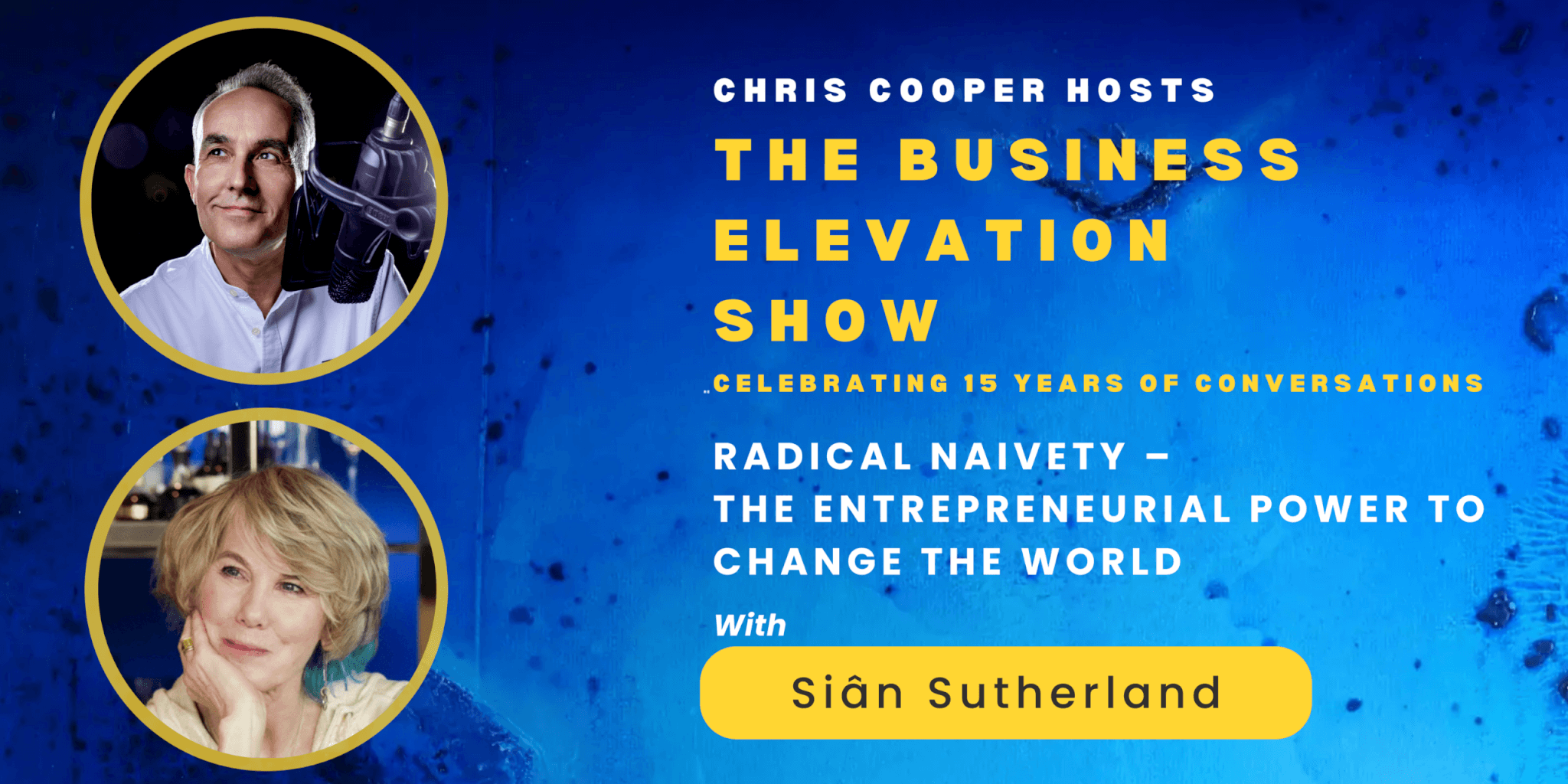
Siân Sutherland: Radical Naivety – The Entrepreneurial Power to Change the World
What if not knowing all the reasons something can’t be done is actually an entrepreneurial superpower?
Siân Sutherland describes herself as “the least likely eco-warrior you could meet.”
Over an extraordinary career, she has repeatedly stepped into industries she knew little about — from advertising to opening a restaurant that gained a Michelin star in its first year, building an award-winning design agency, and creating and ultimately selling the successful skincare brand Mama Mio.
She calls her approach “radical naivety”: the willingness to take the first step, ask different questions and pursue possibilities before knowing all the reasons they might not work.
Today, Siân is applying that same entrepreneurial mindset to some of our biggest global challenges.
As co-founder of A Plastic Planet, PlasticFree Babies and the EXO Institute, she is working to tackle the plastic and climate poly-crisis, accelerate innovation and rethink the systems that created these problems in the first place.
In this episode of The Business Elevation Show, Chris and Siân explored her remarkable entrepreneurial journey, why recycling alone will never solve the plastic crisis, the potential impact of plastics on human health, and the exciting innovations and new materials that could help us build a better future.
They also explored why Siân believes changing systems requires changing leaders, what business can achieve when positive impact is embedded into its purpose, and the practical lessons she has learned from more than 30 years of entrepreneurship.
Here are some top takeaways from the interview you won’t want to miss:
1. Radical Naivety as an Entrepreneurial Superpower
Sian described “radical naivety” as the willingness to pursue new ventures without being constrained by existing norms or all the reasons something can’t be done, allowing for true innovation and different solutions.
2. Plastic Problem: Not Just Waste, but Production and Design
The issue of plastics is framed fundamentally as a production and design problem, not just a matter of waste or recycling. The real challenge is the scale at which plastic is produced and its intended single-use nature.
3. Recycling Myth and the Role of Industry
There is a widespread misconception about the recyclability of plastics. Most plastic is down-cycled, not truly recycled, with a majority exported to other countries—constituting “waste imperialism”.
The plastics industry has perpetuated the recycling myth to justify continued production.
4. Plastics as a Gateway Issue
Plastics represent a gateway to broader systemic problems: hyper-consumption, normalisation of waste, social inequality, and climate impact. However, they also present an opportunity to transition toward better systems and innovative materials.
5. Health Impacts of Plastics
There are significant health concerns associated with chemicals in plastics and microplastics, including endocrine disruption, reduced fertility, and increased incidence of specific conditions in newborns.
The “Plastic Free Babies Movement” targets protecting infants during their first 1,000 days—a critical window for lifelong health outcomes.
6. Innovation and Hope
There is optimism in the potential for material innovation, such as bio-derived and circular solutions, but entrepreneurs in this space often face hurdles attracting capital and scaling their businesses.
Creating broader awareness—especially by connecting the plastic crisis to human health—may spur action and investment.
7. The Importance of Communication and Narrative
Changing the narrative from doom and gloom to solutions and positive action is essential for motivating public and business engagement.
Aligning messaging around urgent, relatable issues like health and specifically babies can galvanise both public and institutional support.
8. Personal and Systemic Responsibility
While individuals are encouraged to be conscious about their plastic use, Sian strongly emphasises that ultimate responsibility lies with industry and government—and only systemic change will resolve the plastic crisis.
Somehow we’ve got to change the narrative and embrace what we have, whilst recognising that we need such a fundamental paradigm shift in how we live on this planet
– Siân Sutherland
Listen for an inspiring and provocative conversation about radical naivety, courageous leadership, entrepreneurship, and our capacity to use business as a powerful force for positive change.
You can listen to this Business Elevation Show interview with Siân Sutherland & Chris Cooper here. Alternatively on Apple Podcasts, Spotify, Tunein, Amazon Music, iHeart Radio (latter US only).
More about Siân Sutherland:
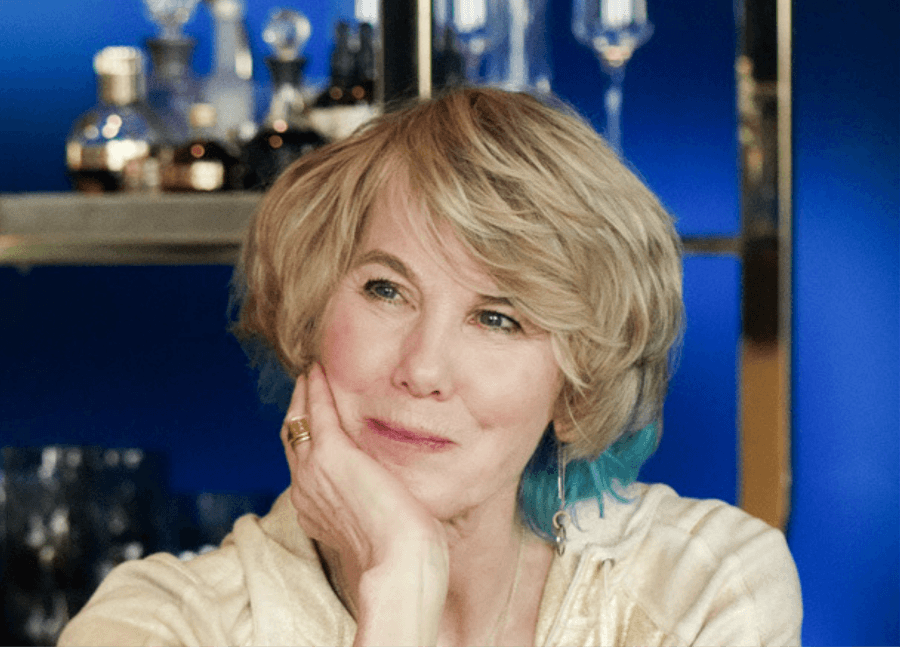
Siân Sutherland – Cofounder and Chief, A Plastic Planet + PlasticFree Babies
Cofounder, EXO Institute; Advisory Board, Roots of Peace
Siân is a passionate systems-change entrepreneur redefining sustainability through communication, innovation and action. De-termined to be part of building a very different future for all of humanity. Siân has led purposeful organisations for over 30 years, from award winning design agencies, to consumer brands and now runs multiple organisations tackling the plastic and climate poly-crisis, connecting the dots to catalyse change.
You may also be interested in
-
Continue reading: Bee Good Gathering 2026

Bee Good Gathering 2026
What Happens When Good People Come Together? Our Bee Good Gathering 2026 At the end of…
-
Continue reading: Kathy Caprino: Finding Brave – Navigating Change Without Losing Who You Are

Kathy Caprino: Finding Brave – Navigating Change Without Losing Who You Are
An open, practical and deeply human conversation about finding brave, navigating uncertainty and becoming more fully…
-
Continue reading: Elevate Yourself, Elevate Others and Amplify Good – Reflections from My Conversation with Kathy Caprino on Finding Brave

Elevate Yourself, Elevate Others and Amplify Good – Reflections from My Conversation with Kathy Caprino on Finding Brave
Elevate Yourself, Elevate Others & Amplify Good – Chris Cooper on Finding Brave
-
Continue reading: Siân Sutherland: Radical Naivety – The Entrepreneurial Power to Change the World
Siân Sutherland: Radical Naivety – The Entrepreneurial Power to Change the World
Radical naivety, courageous leadership, entrepreneurship, and our capacity to use business as a powerful force for…
-
Continue reading: Special Encore: Iron Man, Not Terminator: Using AI to Amplify Human Potential with Bennett Borden

Special Encore: Iron Man, Not Terminator: Using AI to Amplify Human Potential with Bennett Borden
An essential conversation for leaders, entrepreneurs, educators and anyone seeking to understand the opportunities and responsibilities that come with the…
-
Continue reading: Make Your Brain Work – The Neuroscience of High Performance Without Burnout – with Amy Brann
Make Your Brain Work – The Neuroscience of High Performance Without Burnout – with Amy Brann
Make your brain work better, elevate performance and achieve more — without burning yourself or those…
-
Continue reading: The Relationships That Shape Our Lives and Success with Dr Neil Wilkie
The Relationships That Shape Our Lives and Success with Dr Neil Wilkie
Explore what makes relationships thrive — and what causes them to deteriorate.
-
Continue reading: Inner Leadership, Global Impact with Lauren L’Amour
Inner Leadership, Global Impact with Lauren L’Amour
A fascinating and practical conversation about why transforming how we lead ourselves can transform the impact…
-
Continue reading: The Second Act Advantage: Why Your Best Years May Still Be Ahead with Jay Samit
The Second Act Advantage: Why Your Best Years May Still Be Ahead with Jay Samit
Learn how to embrace change, identify new possibilities and turn everything you’ve learned into greater purpose,…
-
Continue reading: From Grief to Belonging to the World with Barry Hoffner
From Grief to Belonging to the World with Barry Hoffner
What an extraordinary journey through life and around the world can teach us about connecting more…
-
Continue reading: Cracking The Code of Human Connection with Jennifer K. Hill
Cracking The Code of Human Connection with Jennifer K. Hill
Why, in an increasingly digital world, authentic connection may be our greatest super-power…
-
Continue reading: Why Relationships Matter More Than Ever In The Age of AI with Judy Robinett
Why Relationships Matter More Than Ever In The Age of AI with Judy Robinett
Listen for a timely, practical and inspiring conversation about leadership, innovation, opportunity and why the right…

We’ve worked with