Click to call Chris Cooper
 Click to email Chris Cooper

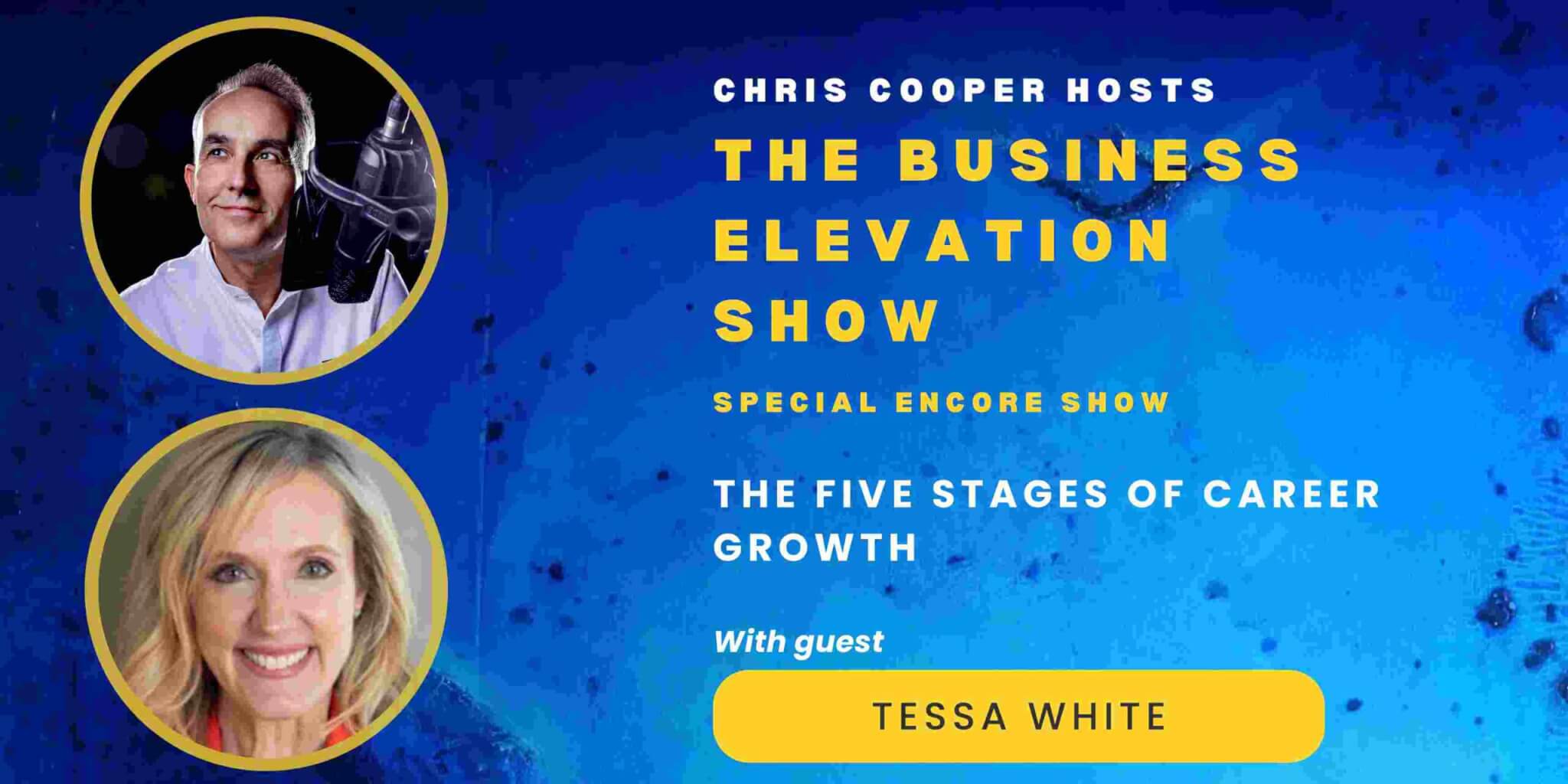
Special Encore: The Five Stages of Career Growth with Tessa White
How do you best navigate your career and the complex relationship between individuals and the workplace today?
Tessa White, known as the Job Doctor, exploded on social media in late 2020 with her expertise on careers and workplace dynamics, after 20 years leading human resources functions within the Fortune 50 to fast-growth start-ups.
With more than one million followers on social media, she was recognised on USA Today’s list as one of the top speakers to watch in 2022. Her first book, The Unspoken Truths for Career Success, and her podcast, The Job Doctor is In, are available on Spotify and Apple.
Tessa has also recently launched a free no-strings-attached mentoring platform called Career RX and is a valued member of The Elevation Collective.
In this Special Encore epsidoe, Chris and Tessa explore her forthcoming book, The 5 Stages of Career Growth, and uncover the insights you need to recognise where you are in your career journey, how to progress to the next stage, and how to build lasting success and fulfilment along the way.
Here are some insights from the interview you won’t want to miss:
The Five Stages of Career Growth:
Tessa outlined a clear framework for career progression, detailing five distinct stages. Each stage comes with specific expectations, required skill sets, and common pitfalls:
Stage 1: Entry-level (coordinators, specialists) – focus on delivering what your manager asks and learning the ropes.
Stage 2: Autonomous contributor – begin to solve problems independently without relying on constant manager input.
Stage 3: Mid-level manager/interdependent stage – team up with others, collaborate, and rely on cross-department interaction.
Stage 4: Director – transition into being a “salesperson” for your ideas, effectively securing resources, and handling higher-level conflict and negotiation.
Stage 5: C-suite/executive – balance strategic input across boards, peers, and teams, while making decisions and fostering communication in a high-stakes environment.
Career Success Isn’t Just About Hard Work:
Excelling at your job description alone will not guarantee success. What matters is “making an impact”—solving key problems and adding value beyond basic responsibilities. Understanding what’s truly needed within your team or organization is crucial.
The Unspoken Truths and Navigating Politics:
Tessa emphasised that many aspects of career progression are unwritten and unspoken. Learning how organisations really work (especially from an HR perspective) and understanding internal politics can give you an edge.
Communication and Conflict as Essential Skills:
At every stage, but especially as you move into management, the ability to communicate well and to handle conflict constructively is vital. Avoiding or mishandling conflict can stall your career, while learning healthy conflict resolution strategies can set you apart.
Workplace Evolution and Young People’s Expectations:
Work and career expectations are quickly changing, especially with Gen Z. There’s more emphasis on work-life balance and more willingness to change jobs or explore nontraditional careers. This brings both opportunities and challenges in the modern workplace.
Education and Career Mismatch:
Tessa, through her work with Utah State University, highlighted the disconnect between education and real career needs, especially as technology evolves. She feels strongly about the need to equip young people with up-to-date information and skills relevant for today’s job market.
Don’t Rely on Annual Reviews Alone:
Traditional annual performance reviews aren’t enough for development; understanding the specific skills required at each career stage is essential for advancement.
Importance of Building Relationships:
Beyond personal performance, consciously building relationships across your organisation can be just as critical to career progression. Mapping out key contacts and strategically improving those relationships can open doors.
Learning to Speak Up and Assume Good Intent:
The ability to voice your needs and opinions—while assuming good intentions in others—can dramatically improve your workplace experience and opportunities for advancement.
Quiet Quitting and the Digital Age:
The trend of “quiet quitting” (doing the bare minimum) is linked to communication breakdowns and a reluctance or inability to resolve conflict directly. The digital, swipe-culture era has made direct conflict resolution less common, so developing those interpersonal skills is more important than ever.
You have more control than you think. Your ability to speak up for what you need… will directly correlate with your experience in the workplace.
– Tessa White
These insights from Tessa White are valuable for anyone at any career stage, and especially useful for those leading teams or mentoring young professionals.
You can listen to this Special Encore Business Elevation Show interview with Tessa White & Chris Cooper here. Alternatively on Apple Podcasts, Spotify, Tunein, Amazon Music, iHeart Radio (latter US only).
More about Tessa White:

At a time when individuals are struggling with their job satisfaction, an unlikely ally was found in a former Fortune 50 executive turned employee advocate. Tessa White, known as the Job Doctor, launched a practice to help individuals better navigate the workplace, and help companies better unlock the potential of their people, just as the pandemic hit.
Tessa exploded on social media with her expertise on careers and how to navigate the complicated relationship between individuals and the workplace in late 2020, after 20 years leading human resources functions within the Fortune 50 to fast growth start-ups. Her insights struck a chord, garnering more than one million followers on social media and she is consistently ranked in the top 1% of similar creators on her LIVE career sessions on TikTok.
Her unique perspective on the modern workplace earned her a place on USA Today’s list as one of the top speakers to watch in 2022.
Her book, The Unspoken Truths for Career Success, and her podcast, The Job Doctor is In, is available on Spotify and Apple. When she isn’t working with companies or individuals about the modern workplace, she can be found on the river, where she fly fishes.
You may also be interested in
-
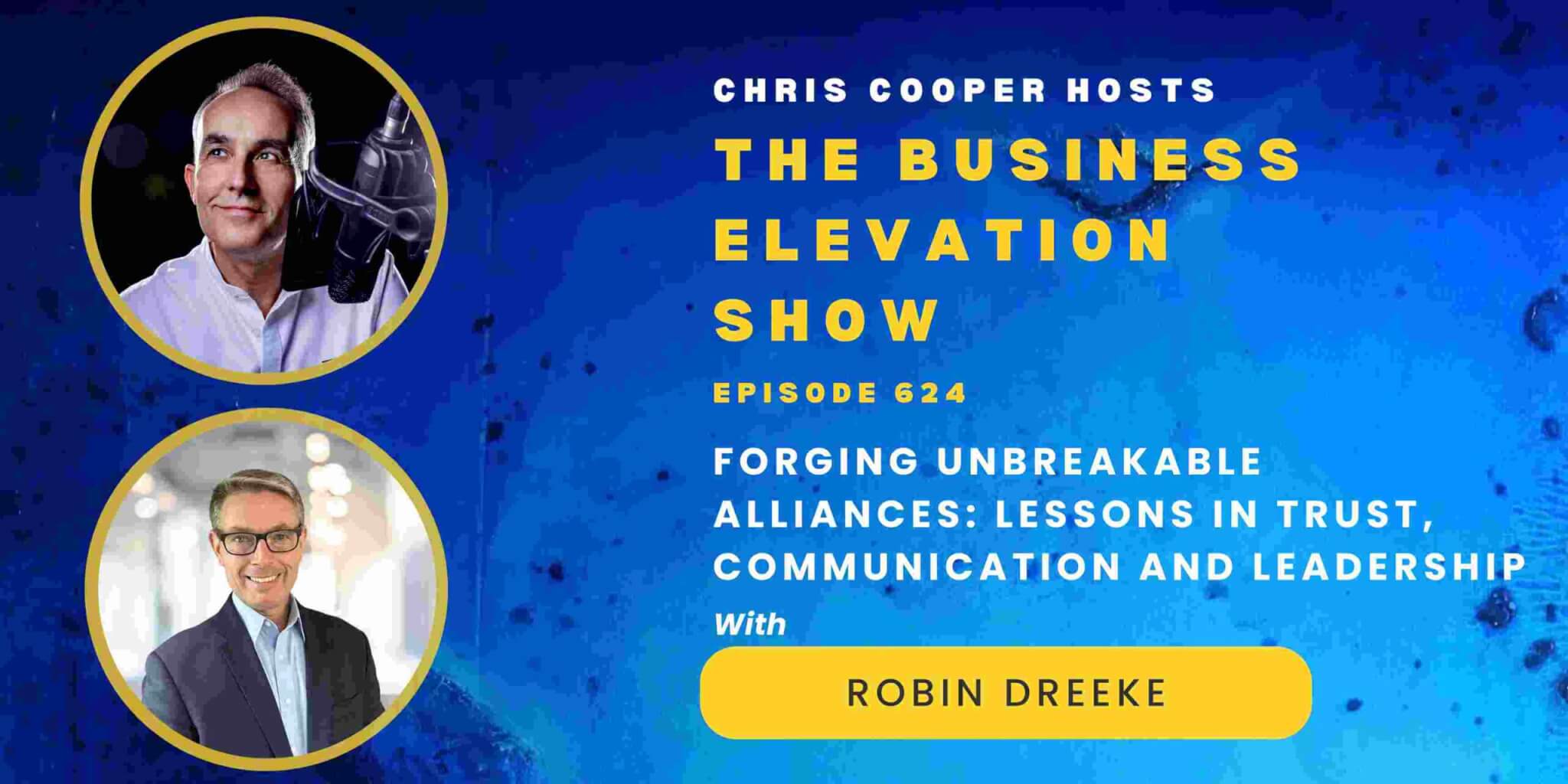
Continue reading: Forging Unbreakable Alliances: Lessons in Trust, Communication and Leadership with Robin Dreeke

Forging Unbreakable Alliances: Lessons in Trust, Communication and Leadership with Robin Dreeke
How to communicate more authentically, lead more consciously, and contribute more meaningfully in a complex world…
-
Continue reading: Special Encore Show: We Are Inseparable – From Fragmentation to Unity — A New Vision for Business, Leadership, and Humanity with Dr Jude Currivan
Special Encore Show: We Are Inseparable – From Fragmentation to Unity — A New Vision for Business, Leadership, and Humanity with Dr Jude Currivan
Discover an evolutionary framework for leadership and business in the 21st century…
-
Continue reading: 10 Elevations For Thriving and Doing Good In The World Today with Chris Cooper
10 Elevations For Thriving and Doing Good In The World Today with Chris Cooper
This episode offers a thoughtful and hopeful close to the year and a powerful opening into…
-
Continue reading: Special Encore: Fierce Civility from Polarization to Lasting Peace with Joe Weston
Special Encore: Fierce Civility from Polarization to Lasting Peace with Joe Weston
Invaluable insights on transforming adversarial interactions into opportunities for growth and connection.
-
Continue reading: Firm Feedback in a Fragile World with Jeff Hancher
Firm Feedback in a Fragile World with Jeff Hancher
Elevate performance, strengthen relationships and lead with both courage and heart.
-
Continue reading: Special Encore: The Five Stages of Career Growth with Tessa White
Special Encore: The Five Stages of Career Growth with Tessa White
Valuable insights for anyone at any career stage, and especially useful for those leading teams or…
-
Continue reading: Graceful Leadership – In times of peace and crisis with Dr Will Parks
Graceful Leadership – In times of peace and crisis with Dr Will Parks
Practical wisdom, hope and perspective on how each of us can amplify good in our own…
-
Continue reading: Entrepreneurship, Happiness and Lifting Communities with Michael Glauser
Entrepreneurship, Happiness and Lifting Communities with Michael Glauser
This conversation will inspire you to think bigger about how your work can make a lasting…
-
Continue reading: The Glacier That Could Change Everything: What Thwaites Teaches Us About Leadership, Urgency and Action with Dr Ted Scambos
The Glacier That Could Change Everything: What Thwaites Teaches Us About Leadership, Urgency and Action with Dr Ted Scambos
What can leaders, innovators, and organisations for good learn from the planet’s most extreme experiment?
-
Continue reading: Intentional Ambition: Redefining Your Work for Greater Joy, Freedom and Fulfilment with Rha Goddess
Intentional Ambition: Redefining Your Work for Greater Joy, Freedom and Fulfilment with Rha Goddess
If you’re ready to lead, create, and live with greater intention, this conversation will help you…
-
Continue reading: Special Encore: Managing Stress with Dr Rachel Morris
Special Encore: Managing Stress with Dr Rachel Morris
Discover how to help manage your stress and the stress of others and thrive in your…
-
Continue reading: Persuasion For Good with Paul du Toit
Persuasion For Good with Paul du Toit
Discover how persuasion, when rooted in authenticity and goodwill, becomes a powerful catalyst for elevation —…



We’ve worked with