Click to call Chris Cooper
 Click to email Chris Cooper

Motivate, Not Deflate: Applying Buddhist Wisdom to Elevate Feedback, Performance, and Leadership with Dr Laura Lois Greenwood
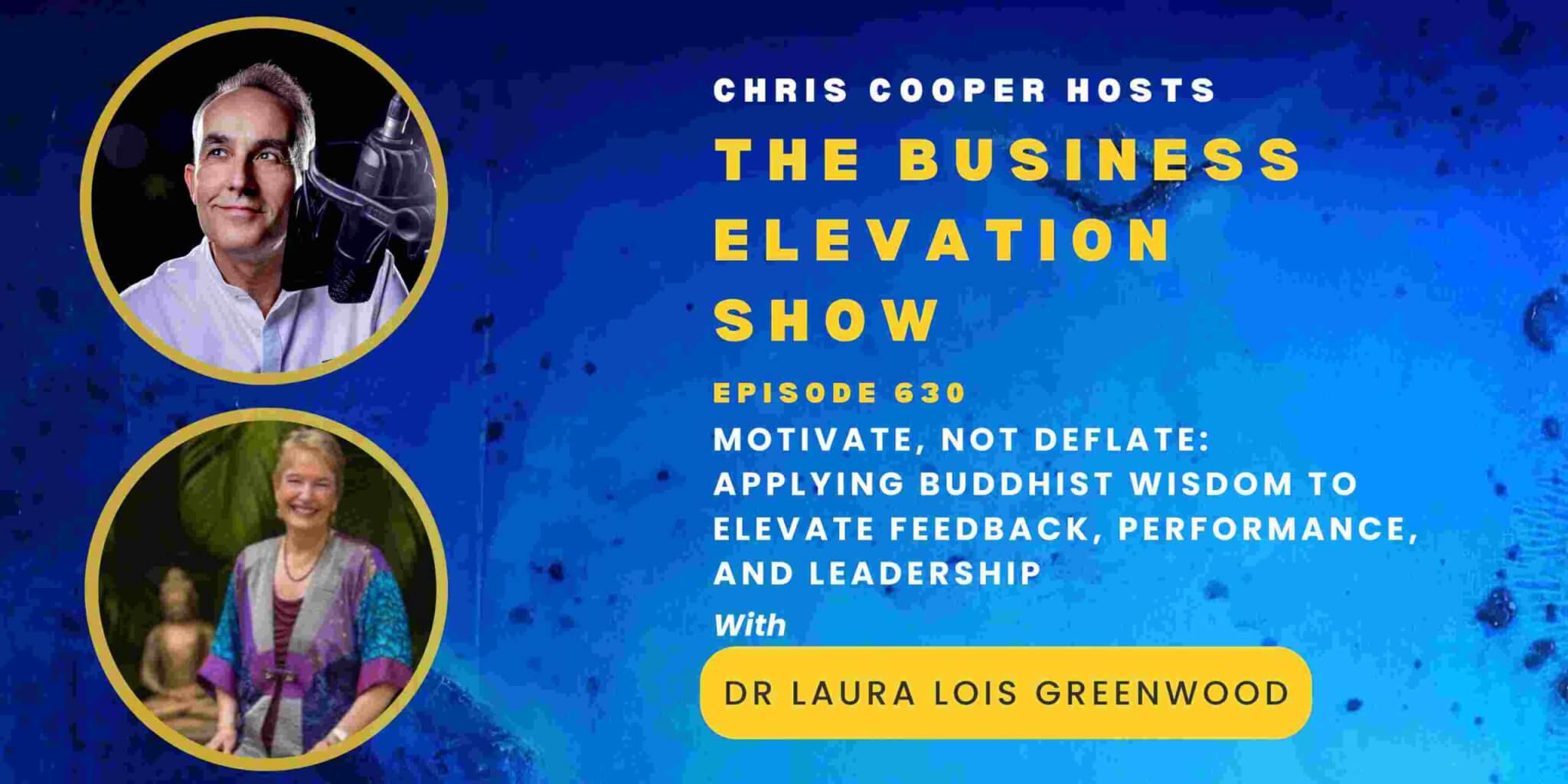
What if some of the most effective tools for feedback, performance management, and emotional intelligence had been refined for centuries?
In this practical and thought-provoking conversation, Chris was joined by Dr Laura Lois Greenwood, a leadership and emotional intelligence specialist who has helped tens of thousands of people transform challenging emotions into clear, compassionate workplace responses.
Drawing on decades of Buddhist practice and real-world organisational leadership, Laura translates ancient mind-training principles into fully secular, workplace-ready tools.
Together, they explored why performance management so often fails, why feedback is the pivotal leadership skill, and how leaders can learn to motivate rather than deflate.
The conversation covered emotional intelligence under pressure, common leadership traps, and Laura’s use of frameworks such as “Friends, Enemies, and Strangers” and the Buddhist understanding of anger, grasping, and indifference — all grounded in everyday organisational behaviour.
Here are some insights from the interview you don’t want to miss:
- The Power of Motivational Leadership
Dr. Laura Lois Greenwood emphasised the difference between leaders who motivate and elevate their teams versus those who deflate and demoralise. She believes true leaders add value by being compassionate and supportive, drawing on ancient Buddhist principles to guide their actions. - Bringing Buddhist Principles into Modern Leadership
The discussion explored how Buddhist concepts—such as managing emotions, appreciating others, and responding with compassion—can transform traditional performance management. Core Buddhist teachings about impermanence, emotional self-control, and the “three poisons” (attachment, anger, indifference) are highly applicable to leadership challenges today. - Performance Management Often Fails Because of Poor Feedback Skills
According to Dr. Laura Lois Greenwood, many leaders fear giving feedback or do it ineffectively, resulting in avoidance or emotional reactions that harm the workplace. She found that 82% of leaders fail to deliver appropriate feedback or praise. - Introduction of the MAYOFNER Method
Dr. Laura Lois Greenwood unveiled her 6-step methodology called MAYOFNER, a practical tool for performance conversations:- Manage emotions
- Appreciation
- Observation (without judgment)
- Feeling (state objectively)
- Need (what’s needed in the situation)
- Response/Request
This method helps hold constructive, compassionate conversations, ensuring feedback is both effective and kind.
- Experiential Learning is Essential
Inspired by Buddhist traditions, Dr. Laura Lois Greenwood designs her leadership workshops as experiential learning opportunities. Leaders are encouraged to practice mindfulness and self-compassion exercises, allowing concepts to go beyond theory and become real-life habits. - Cultural Diversity in the Workplace
Her hospitality industry experience in Hawaii highlights cultural clashes between Western and Asian-Pacific values. She sees communication style differences and misunderstandings as opportunities to apply her feedback and emotional intelligence framework. - Why Compassion Matters in Organisations
Practicing compassion isn’t just “nice”—it’s essential for organisational effectiveness, health, and performance. Toxic workplace atmospheres lead to stress and “quiet quitting,” while compassionate methods boost engagement, well-being, and business results. - Sustainable Change Through Internal Champions
One-off training doesn’t create real change; instead, Dr. Laura Lois Greenwood recommended training internal leaders as facilitators so that the methods become truly embedded within the organisation. - This Method is Expanding Globally
Although Dr. Laura Lois Greenwood developed her model in Hawaii, she’s now working with Compassion 2.0 to train master facilitators around the world, making these practical tools even more widely available. - Final Message: Good Leadership Equals a Better World
The interview closed with a reminder from Chris and Dr. Laura that we can be compassionate, strong, and effective business leaders—and that doing so has a meaningful impact on our organisations and the world.
You need to ask. And if they say no, that’s valuable information. You want to know why they don’t.
– Dr Laura Lois Greenwood
Listeners will leave with practical insights, a simple feedback structure, and a short mind-training exercise they can apply immediately at work.
You can listen to this Business Elevation Show interview with Dr Laura Lois Greenwood & Chris Cooper here. Alternatively on Apple Podcasts, Spotify, Tunein, Amazon Music, iHeart Radio (latter US only).
More about Dr Laura Lois Greenwood:
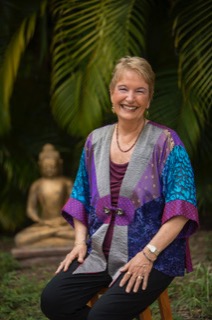
Dr Laura Lois Greenwood is a leadership and emotional intelligence specialist who has supported tens of thousands of people in transforming challenging emotions into clear, compassionate responses that strengthen relationships and improve workplace effectiveness. Drawing on decades of Buddhist practice, she translates ancient mind-training methods into practical tools for communication, feedback, and emotionally balanced leadership.
She has designed and delivered more than forty original training programmes across leadership, conflict resolution, mindfulness, cultural diversity, and organisational development. As the founding Director of the Workforce Training Centre at the University of Hawaii Maui College, Dr Greenwood led workforce initiatives for 22 years and certified hundreds of facilitators through Train-the-Trainer programmes. Her clients include leading hospitality, healthcare, and public-sector organisations in Hawaii and internationally.
Dr Greenwood holds a BA with Phi Beta Kappa distinction, an MA in East Asian Studies, and a PhD from the University of California, Berkeley. A committed student of Buddhism since 1968, she has studied extensively in Asia and Nepal and helped found Vajrapani Retreat Centre in California. Her work integrates Eastern contemplative wisdom with Western leadership practice to foster resilience, emotional intelligence, and lasting organisational change.
You may also be interested in
-
Continue reading: From Burnout to Contribution: The Way of Twilight with Michael Brant DeMaria

From Burnout to Contribution: The Way of Twilight with Michael Brant DeMaria
If you are a leader, entrepreneur or change-maker navigating pressure and responsibility, this episode offers both…
-
Continue reading: Elevation Collective Voices – The Art of Connection

Elevation Collective Voices – The Art of Connection
The Art of Connection: Why Community Matters More Than Ever This week we held another Elevation…
-
Continue reading: Acting for Peace: How To Build It in Our Work and Communities with Michael Macy
Acting for Peace: How To Build It in Our Work and Communities with Michael Macy
This is not a political discussion. It is a human one. It is about responsibility, agency…
-
Continue reading: Motivate, Not Deflate: Applying Buddhist Wisdom to Elevate Feedback, Performance, and Leadership with Dr Laura Lois Greenwood
Motivate, Not Deflate: Applying Buddhist Wisdom to Elevate Feedback, Performance, and Leadership with Dr Laura Lois Greenwood
Dr Laura translates ancient mind-training principles into fully secular, workplace-ready tools.
-
Continue reading: How To Bridge Divides with Simon Greer
How To Bridge Divides with Simon Greer
A timely and deeply human discussion about what each of us can do to foster understanding,…
-
Continue reading: Nature for Everyone: Why Biodiversity Matters to Business, Communities, and You with Helen Avery
Nature for Everyone: Why Biodiversity Matters to Business, Communities, and You with Helen Avery
A conversation about hope, system change and the role we can all play in creating a…
-
Continue reading: Communicating for Good: Storytelling To Change and Save Lives with Rhonda Curry
Communicating for Good: Storytelling To Change and Save Lives with Rhonda Curry
If you want your communication to build trust, inspire action and change—or even save—lives, this episode…
-
Continue reading: Healing Trauma, Gracefully with Dr Lori Leyden
Healing Trauma, Gracefully with Dr Lori Leyden
Inspiration, wisdom and a transformational perspective on how best to overcome trauma.
-
Continue reading: Winning The Snakes & Ladders Game Of Life with Paul Davis
Winning The Snakes & Ladders Game Of Life with Paul Davis
Reflection, perspective, and practical wisdom for anyone rethinking their direction, their leadership, or the game they’re…
-
Continue reading: Forging Unbreakable Alliances: Lessons in Trust, Communication and Leadership with Robin Dreeke
Forging Unbreakable Alliances: Lessons in Trust, Communication and Leadership with Robin Dreeke
How to communicate more authentically, lead more consciously, and contribute more meaningfully in a complex world…
-
Continue reading: Special Encore Show: We Are Inseparable – From Fragmentation to Unity — A New Vision for Business, Leadership, and Humanity with Dr Jude Currivan
Special Encore Show: We Are Inseparable – From Fragmentation to Unity — A New Vision for Business, Leadership, and Humanity with Dr Jude Currivan
Discover an evolutionary framework for leadership and business in the 21st century…
-
Continue reading: 10 Elevations For Thriving and Doing Good In The World Today with Chris Cooper
10 Elevations For Thriving and Doing Good In The World Today with Chris Cooper
This episode offers a thoughtful and hopeful close to the year and a powerful opening into…


We’ve worked with