Click to call Chris Cooper
 Click to email Chris Cooper

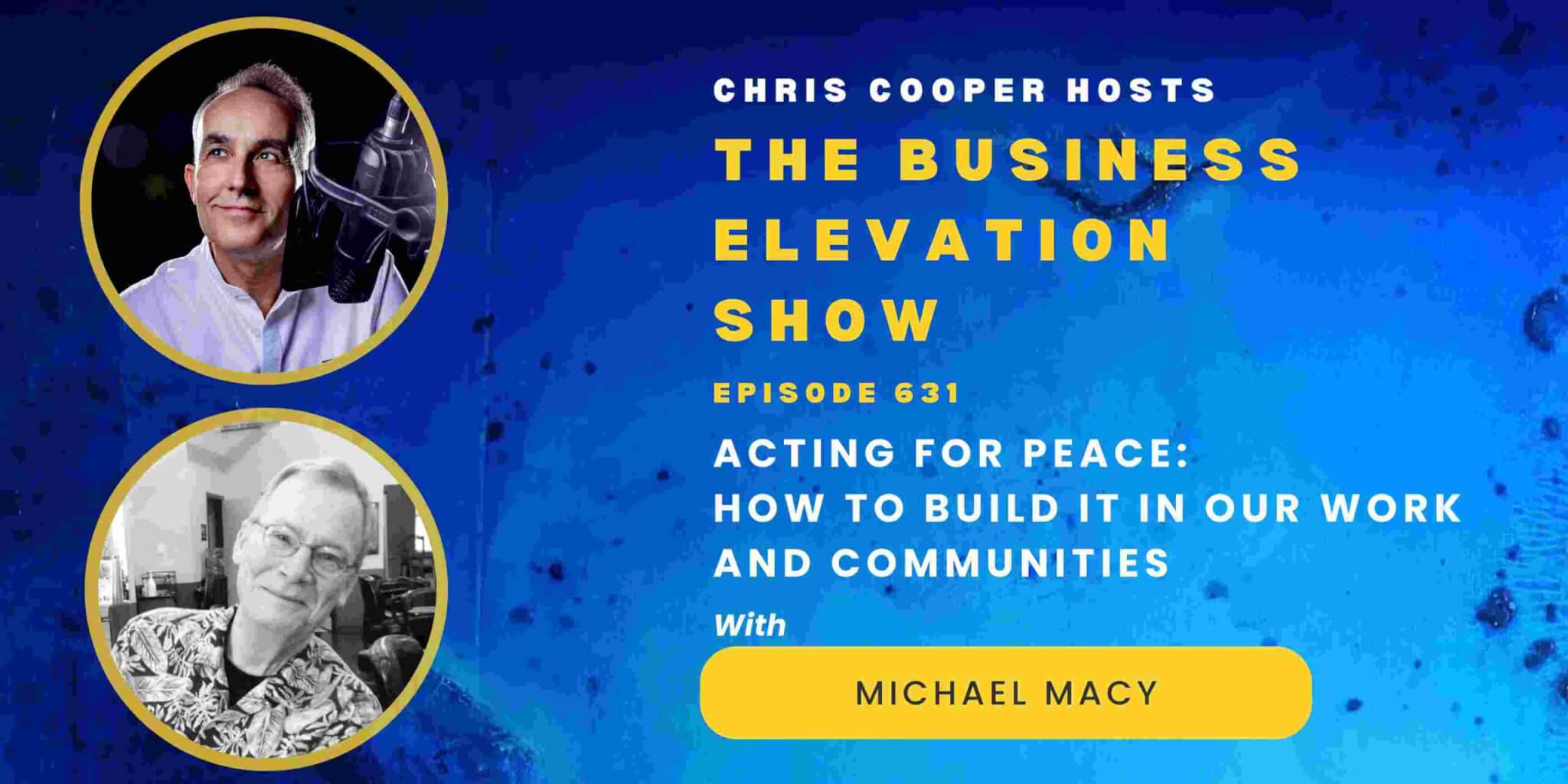
Acting for Peace: How To Build It in Our Work and Communities with Michael Macy
Peace is not passive. It is not abstract. And it is not something reserved for governments, diplomats or global leaders.
It is something we build — or undermine — every single day through how we communicate, how we lead, how we handle disagreement, and how we speak about those who see the world differently.
In this thought provoking and deeply practical conversation, Chris Cooper is joined by Michael Macy — former U.S. diplomat, intercultural communications specialist, long-time student of Sufism, and co-founder of Enacting Peace.
Drawing on nearly 30 years in the Foreign Service, with experience spanning the UK, Afghanistan, India, Haiti, Saudi Arabia and Tunisia, Michael shares what peace-building really looks like beyond headlines and politics.
Together they explore why peace is the invisible foundation upon which business, communities and everyday life depend.
They reflect on the difference between conflict and violence, and why that distinction matters profoundly in the workplace.
They consider how inherited stories, fear and polarisation shape the culture around us — and what conscious individuals can do to interrupt that cycle.
Here are some insights from the interview you don’t want to miss:
- Peace Begins with Individual Action:
Michael Macy emphasised that peace isn’t just a lofty global goal or the domain of governments and diplomats—it’s something every individual can consciously enact in their daily lives, workplaces, and communities. - Peace is Not Passive:
Real peace is active—it’s built through intentional actions, acts of kindness, and engagement with those around us. It requires effort and is not simply the absence of open conflict or violence. - Local Focus Counters Overwhelming Global Fear:
Instead of being overwhelmed by constant global conflict reports and fear-driven media, Michael Macy encouraged paying attention to what’s happening locally—strengthening neighbourhood ties and focusing on what you can positively influence in your immediate environment. - The Transformative Power of Kindness:
Small, conscious acts—like doing a kind favour for someone, celebrating peace, or even sharing recipes that evoke peace—can create a ripple effect, shifting mindsets from fear and conflict to cooperation and empathy. - Peace is the Foundation for Flourishing:
Businesses, communities, and even families thrive when there is an underpinning of peace. The absence of peace stalls growth, creativity, and potential. Michael Macy used the transformation of areas like Canary Wharf and post-conflict Northern Ireland as real-life examples of what peace enables. - Conflict Isn’t the Enemy—Violence Is:
It’s normal to have conflict; the goal isn’t to erase it but to resolve it without violence. A peaceful environment creates the safety and space for real resolution and growth. - Enacting Peace – A Practical Invitation:
Michael Macy co-founded Enacting Peace, inviting people to consciously act for peace at least four times a year, tied to the equinoxes and solstices, making peace-building a practical, doable habit. - Listening and Inclusion in Organisations:
Leadership that encourages open dialogue, listens more than it speaks, and creates a culture of celebration and human connection can turn conflict into growth and innovation rather than division. - Let Go of Nostalgia; Focus on the Present:
Clinging to an idealised past or inherited trauma can hold people and organisations back. Michael Macy stressed the importance of releasing old stories and focusing on inspiration, innovation, and what can be built now. - Gratitude and Self-Kindness Foster Inner Peace:
Developing inner peace—being kind to oneself and others, practicing gratitude, and acting with mercy—lays the groundwork for effectively contributing to peace in the wider world.
Peace is not passive. Peace is a result of action… celebrate peace, act for peace, and be aware of it
– Michael Macy
This is not a political discussion. It is a human one. It is about responsibility, agency and the small, deliberate choices that shape the environments we create at work and in our communities.
Because peace doesn’t simply happen. It is enacted — by each of us.
You can listen to this Business Elevation Show interview with Michael Macy & Chris Cooper here. Alternatively on Apple Podcasts, Spotify, Tunein, Amazon Music, iHeart Radio (latter US only).
More about Michael Macy:
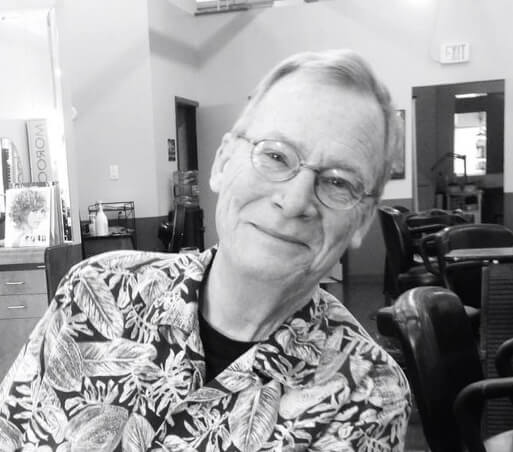
Michael Macy is a pilgrim who has spent a lifetime exploring communications and the boundaries of cultural conditioning.
After time in a Catholic seminary, he spent a decade wondering around the United States and Canada. He went to five universities eventually obtaining degrees in American Culture and Communications Arts.
Amidst dropping in and out of school he worked as a merchant seaman, in a railroad yard, with Greenpeace, dismantling buildings, and travelling with one of America’s great holy fools. He then went to graduate school in law, which included moving to India to study community dispute resolution and wound up managing a development project in a disadvantaged community in Delhi.
His professional trajectory followed his interest in communications and culture. He trained in interpersonal communication and worked as a therapist. He studied law to understand ritualistic communication and worked as a trial lawyer. He learned marketing when recruited as a public relations executive. He hosted a radio talk show.
Eventually, he spent nearly 30 years as a U.S. diplomat involved in intercultural communication and left the State Department with the title of Counselor in the Senior Foreign Service. As a diplomat he focused on developing mutual understanding between the U.S. and the countries where he served, including the UK, Mali, Malta, Saudia Arabia, Afghanistan, India, Haiti and Tunisia and short stints in Egypt, France, Turkey and Ghana.
In order to build those bridges, he worked with dancers, writers, artists, academics, journalists, religious community leaders and comedians. He also staffed a dozen White House international trips.
Throughout his wanderings, explored spiritual experience. He was a murid (student) of Pir Vilayat Inayat Khan for 25 years, eventually being ordained as a Chirag (minister) in the Universal Worship and as a Healing Conductor in the Healing Order of the Inayati Order. He participated in the Kalachakra Initiation held by HH the Dali Lama, spent time with the Sufis of India, Afghanistan, Mali and Tunisia and meditated at the Hindu holy sites of Gangotri and Rishikesh.
Along the way he developed an understanding of the Buddhist, Hindu, Jewish, Christian, and Native American traditions and a deep appreciation for the holy fools, madzubs, and lovers who exemplify the divine reality. He is currently a student of the Sufi Murshid David Shahabuddin Less.
Michael is currently working on two peace initiatives. He is on the board of the Abrahamic Reunion, which is dedicated to peace in the Israel and Palestine and is one of the founders of Enacting Peace, an international effort to invite people to act for peace. It has no dogma, no dues and no politics, just an invitation that people will celebrate peace, act for peace and experience their own power to create peace,
You may also be interested in
-
Continue reading: Siân Sutherland: Radical Naivety – The Entrepreneurial Power to Change the World

Siân Sutherland: Radical Naivety – The Entrepreneurial Power to Change the World
Radical naivety, courageous leadership, entrepreneurship, and our capacity to use business as a powerful force for…
-
Continue reading: Special Encore: Iron Man, Not Terminator: Using AI to Amplify Human Potential with Bennett Borden

Special Encore: Iron Man, Not Terminator: Using AI to Amplify Human Potential with Bennett Borden
An essential conversation for leaders, entrepreneurs, educators and anyone seeking to understand the opportunities and responsibilities that come with the…
-
Continue reading: Make Your Brain Work – The Neuroscience of High Performance Without Burnout – with Amy Brann
Make Your Brain Work – The Neuroscience of High Performance Without Burnout – with Amy Brann
Make your brain work better, elevate performance and achieve more — without burning yourself or those…
-
Continue reading: The Relationships That Shape Our Lives and Success with Dr Neil Wilkie
The Relationships That Shape Our Lives and Success with Dr Neil Wilkie
Explore what makes relationships thrive — and what causes them to deteriorate.
-
Continue reading: Inner Leadership, Global Impact with Lauren L’Amour
Inner Leadership, Global Impact with Lauren L’Amour
A fascinating and practical conversation about why transforming how we lead ourselves can transform the impact…
-
Continue reading: The Second Act Advantage: Why Your Best Years May Still Be Ahead with Jay Samit
The Second Act Advantage: Why Your Best Years May Still Be Ahead with Jay Samit
Learn how to embrace change, identify new possibilities and turn everything you’ve learned into greater purpose,…
-
Continue reading: From Grief to Belonging to the World with Barry Hoffner
From Grief to Belonging to the World with Barry Hoffner
What an extraordinary journey through life and around the world can teach us about connecting more…
-
Continue reading: Cracking The Code of Human Connection with Jennifer K. Hill
Cracking The Code of Human Connection with Jennifer K. Hill
Why, in an increasingly digital world, authentic connection may be our greatest super-power…
-
Continue reading: Why Relationships Matter More Than Ever In The Age of AI with Judy Robinett
Why Relationships Matter More Than Ever In The Age of AI with Judy Robinett
Listen for a timely, practical and inspiring conversation about leadership, innovation, opportunity and why the right…
-
Continue reading: How to Become Trigger-Proof with Nima Rahmany
How to Become Trigger-Proof with Nima Rahmany
A conversation about emotional resilience, leadership, parenting, relationships and how becoming “trigger-proof” can help us create…
-
Continue reading: How to Get People to Tell You Everything with Brad Beeler
How to Get People to Tell You Everything with Brad Beeler
Explore the psychology of trust, the power of curiosity, the importance of first impressions, how to…
-
Continue reading: Open Your Mind: Curiosity, Consciousness and Human Potential with Nick Cook
Open Your Mind: Curiosity, Consciousness and Human Potential with Nick Cook
Curiosity, innovation, consciousness, leadership, global challenges and why expanding our thinking may be essential to creating…

We’ve worked with