Click to call Chris Cooper
 Click to email Chris Cooper

Why We Need More Heroes with Paula Reid
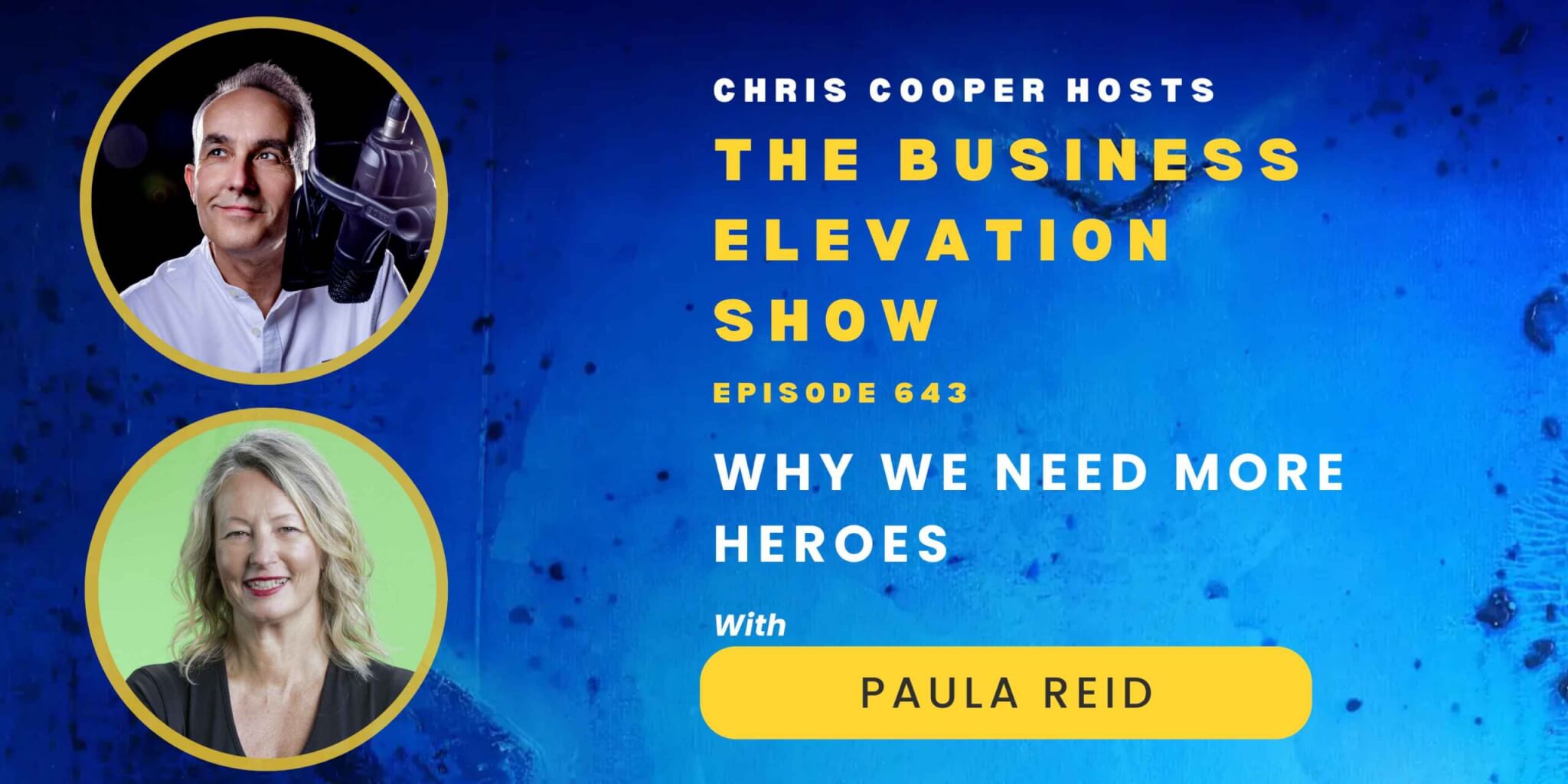
What does it mean to be a hero in today’s world? Is heroism reserved for extraordinary individuals, or is it something that all of us can choose in our everyday lives?
In this episode of the Business Elevation Show, Chris was joined by adventurer, speaker, author and adventure psychologist Paula Reid. From skiing to the South Pole and yacht racing around the world, to supporting humanitarian initiatives in Ukraine, Paula has spent her life exploring what enables people to perform, thrive and grow in the face of uncertainty, adversity and challenge.
Drawing on more than 120 adventures, a Master’s degree in Positive Psychology and her pioneering work in Adventure Psychology, Paula shared powerful insights into courage, resilience, curiosity and what it means to “go Knowingly into the Unknown™”.
She explained why growth rarely happens within our comfort zones, how we can develop the mindset to navigate uncertainty, and why some of life’s greatest rewards often lie on the other side of fear.
Together, Chris and Paula explored the inspiration behind her TEDx talk ‘We Need More Heroes’, the lessons learned from some of the world’s toughest environments, and the remarkable humanitarian work being under-taken through the Hopefull initiative in Ukraine.
They discussed how ordinary people can make an extraordinary difference and why heroism is often found in the small decisions we make every day.
Here are some insights from the interview you don’t want to miss:
- The Power of Mindset in Performance and Leadership
A significant portion of performance—often cited up to 100% by participants in Paula’s workshops—is attributed to mindset and attitude. The way leaders think and approach situations not only impacts their own outcomes but also profoundly shapes those around them, influencing company culture and collective behaviour.
Mindset is a choice, and consciously choosing a positive outlook, especially in challenging environments, enables resilience and effective leadership. - Embracing Uncertainty and Building Confidence
Actively heading “knowingly into the unknown” is a recurring theme, emphasising the growth that comes from stepping outside comfort zones.
Drawing on wisdom, experience, and foresight, individuals can prepare for uncertainty while remaining open to learning and adapting. Too much reliance on certainty or knowledge can lead to stagnation, while comfort with not knowing creates opportunity for personal and professional development. - Risk vs. Fear Management
Paula distinguished between objective risks and subjective fears. Creating clear lists of each and using appropriate strategies—risk management techniques for objective risks and psychological strategies for internal fears—leads to more effective decision-making in uncertain situations.
Many barriers are more about fear than real risk, and breaking these down lets people engage with challenging or impactful work (such as volunteering in Ukraine) with more clarity and less anxiety. - Resilience and Courage are Trainable
Resilience and courage function as muscles: the more one faces adversity or takes on new challenges, the more capable and less fearful one becomes.
Repeated experiences—whether adventurous or humanitarian—help individuals develop more robust coping mechanisms and a more resilient mindset, making future fears easier to manage. - The Importance of Choosing to Contribute
Facing the tough realities of the world, such as the humanitarian crisis in Ukraine, requires not just empathy but a willingness to act, even though it can be emotionally difficult.
Taking concrete, positive action—no matter how small—can be infectious and inspire others to do the same, contributing to collective well-being and resilience. - We Need More Everyday Heroes
The Hero’s Journey is not just for iconic figures; everyone has the capacity to be heroic by stepping up, pushing themselves, and making a positive difference in the world, whether on a large scale or through everyday kindness.
Waiting for big names or traditional role models is insufficient; ordinary people can model heroism and inspire positive change in their communities. - Practical Ways to Help and Get Involved
Direct participation in some humanitarian efforts (like volunteering in Ukraine) has become more restricted due to security risks, but ongoing support through donations and participation in charity events is crucial to sustaining these operations.
Supporting organisations like Hopefull—through funding, advocacy, or participating in endurance and fundraising events—enables critical humanitarian and rehabilitation work to continue. - Reflection and Purposeful Pause
The interview also encouraged listeners to regularly pause, reflect, and reconnect with global issues, not as a source of overwhelm but as a call to responsible, compassionate action and personal growth.
I believe that when we each choose to do the right thing—whether the action is small or great—we can have a powerful impact. Doing what is right is infectious. It can inspire, encourage, and strengthen others to do the right thing as well.
– Paula Reid
Join us for an inspiring and thought-provoking conversation about courage, adventure, purpose and how each of us can play a more meaningful role in creating a better future.
You can listen to this Business Elevation Show interview with Paula Reid & Chris Cooper here. Alternatively on Apple Podcasts, Spotify, Tunein, Amazon Music, iHeart Radio (latter US only).
More about Paula Reid:
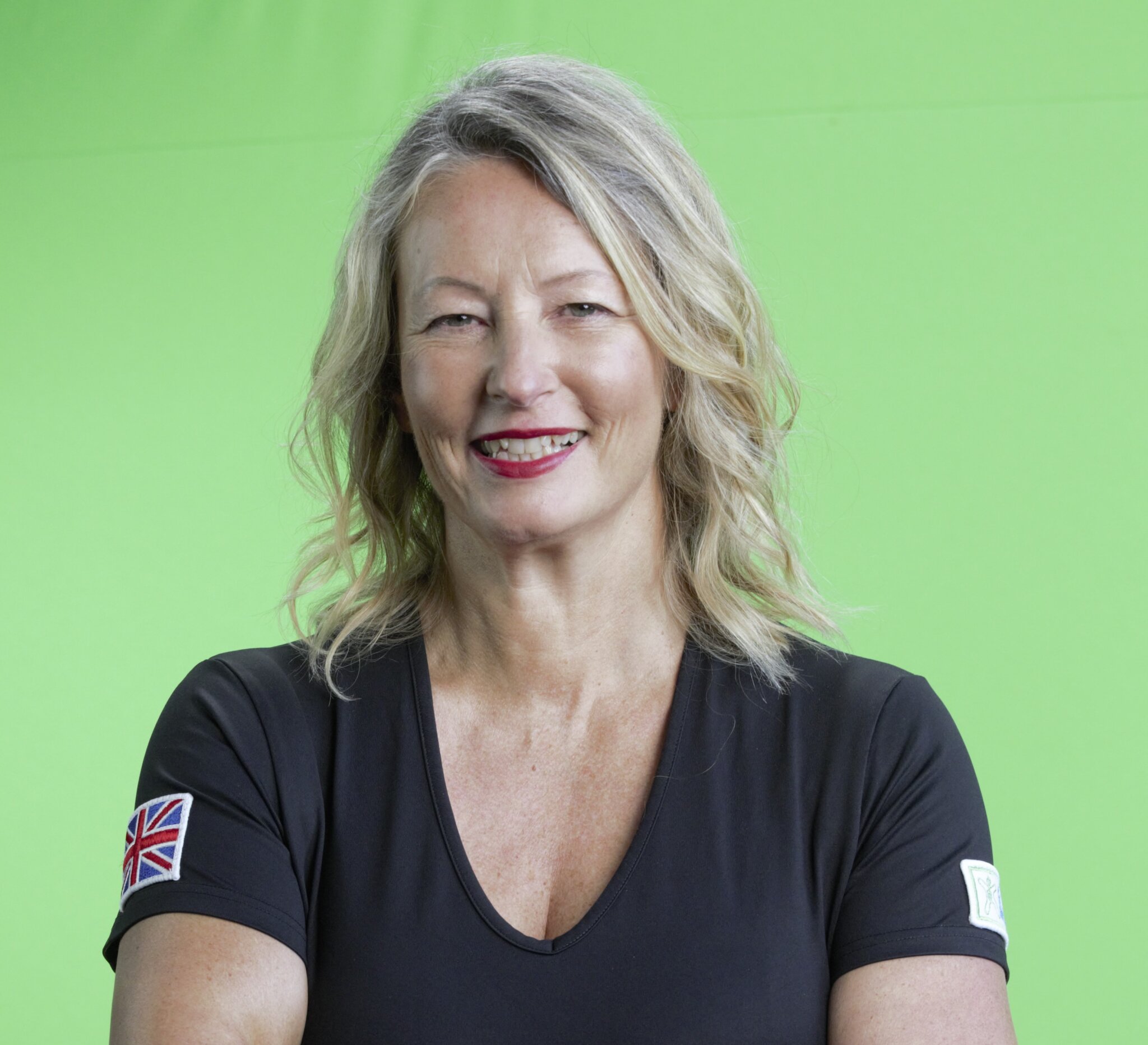
From Skiing to the South Pole to Yacht Racing round-the-world to humanitarian work in Ukraine, Paula Reid has learned to develop the mindset to thrive and perform in the toughest of conditions.
She draws on her extreme adventuring experience, business acumen and Masters in Positive Psychology to help individuals and organisations sur-vive and thrive in challenging conditions and to ‘go Knowingly into the Unknown’™.
Her work and expertise is in ‘Adventure Psychology’. She has written five books and deliv-ered two TEDx talks – the latest called ‘We Need More Heroes’.
You may also be interested in
-
Continue reading: Bee Good Gathering 2026

Bee Good Gathering 2026
What Happens When Good People Come Together? Our Bee Good Gathering 2026 At the end of…
-
Continue reading: Kathy Caprino: Finding Brave – Navigating Change Without Losing Who You Are

Kathy Caprino: Finding Brave – Navigating Change Without Losing Who You Are
An open, practical and deeply human conversation about finding brave, navigating uncertainty and becoming more fully…
-
Continue reading: Elevate Yourself, Elevate Others and Amplify Good – Reflections from My Conversation with Kathy Caprino on Finding Brave

Elevate Yourself, Elevate Others and Amplify Good – Reflections from My Conversation with Kathy Caprino on Finding Brave
Elevate Yourself, Elevate Others & Amplify Good – Chris Cooper on Finding Brave
-
Continue reading: Siân Sutherland: Radical Naivety – The Entrepreneurial Power to Change the World
Siân Sutherland: Radical Naivety – The Entrepreneurial Power to Change the World
Radical naivety, courageous leadership, entrepreneurship, and our capacity to use business as a powerful force for…
-
Continue reading: Special Encore: Iron Man, Not Terminator: Using AI to Amplify Human Potential with Bennett Borden

Special Encore: Iron Man, Not Terminator: Using AI to Amplify Human Potential with Bennett Borden
An essential conversation for leaders, entrepreneurs, educators and anyone seeking to understand the opportunities and responsibilities that come with the…
-
Continue reading: Make Your Brain Work – The Neuroscience of High Performance Without Burnout – with Amy Brann
Make Your Brain Work – The Neuroscience of High Performance Without Burnout – with Amy Brann
Make your brain work better, elevate performance and achieve more — without burning yourself or those…
-
Continue reading: The Relationships That Shape Our Lives and Success with Dr Neil Wilkie
The Relationships That Shape Our Lives and Success with Dr Neil Wilkie
Explore what makes relationships thrive — and what causes them to deteriorate.
-
Continue reading: Inner Leadership, Global Impact with Lauren L’Amour
Inner Leadership, Global Impact with Lauren L’Amour
A fascinating and practical conversation about why transforming how we lead ourselves can transform the impact…
-
Continue reading: The Second Act Advantage: Why Your Best Years May Still Be Ahead with Jay Samit
The Second Act Advantage: Why Your Best Years May Still Be Ahead with Jay Samit
Learn how to embrace change, identify new possibilities and turn everything you’ve learned into greater purpose,…
-
Continue reading: From Grief to Belonging to the World with Barry Hoffner
From Grief to Belonging to the World with Barry Hoffner
What an extraordinary journey through life and around the world can teach us about connecting more…
-
Continue reading: Cracking The Code of Human Connection with Jennifer K. Hill
Cracking The Code of Human Connection with Jennifer K. Hill
Why, in an increasingly digital world, authentic connection may be our greatest super-power…
-
Continue reading: Why Relationships Matter More Than Ever In The Age of AI with Judy Robinett
Why Relationships Matter More Than Ever In The Age of AI with Judy Robinett
Listen for a timely, practical and inspiring conversation about leadership, innovation, opportunity and why the right…

We’ve worked with